A journey to the West
90 days at the Lotus Feet of Shri Mataji in C.J. School
These fragmented notes document a yogi's journey from Beijing to volunteer at C.J. School in the spring of 2025. Compiled from scattered records kept during those three months and originally written in Chinese, this account has been translated with AI assistance. You may notice significant events lack detailed documentation, while most entries remain brief. This reflects our intensely busy schedule—we snatched moments between tasks to jot down fragments. The most important events often coincided with our busiest times, so their absence here implies not insignificance, but rather the opposite. Still, we hope these glimpses offer spiritual reflection: on Sahaja education, our children, and our collective future. Above all, if they inspire you to join us as volunteers—or confidently send your children to begin your family's new spiritual chapter—that would be our greatest reward.
At term's end, one parent was astonished to learn that we had truly traveled from Beijing—a 23-hour journey. Yes, we did come from very far away. And it's worth it!
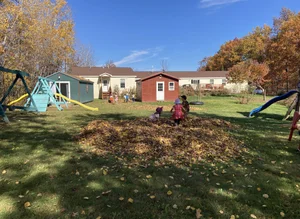
A journey to the West ——90 days at the Lotus Feet of Shri Mataji in C.J. School Prologue These fragmented notes document a yogi's journey from Beijing to volunteer at C.J. School in the spring of 2025. Compiled from scattered records kept during those three months and originally written in Chinese, this account has been translated with AI assistance. You may notice significant events lack detailed documentation, while most entries remain brief. This reflects our intensely busy schedule—we snatched moments between tasks to jot down fragments. The most important events often coincided with our busiest times, so their absence here implies not insignificance, but rather the opposite. Still, we hope these glimpses offer spiritual reflection: on Sahaja education, our children, and our collective future. Above all, if they inspire you to join us as volunteers—or confidently send your children to begin your family's new spiritual chapter—that would be our greatest reward. At term's end, one parent was astonished to learn that we had truly traveled from Beijing—a 23-hour journey. Yes, we did come from very far away. And it's worth it! March 20th On a rain-lashed night, a Russian physicist drove an SUV through the quiet, remote roads of the American countryside. He carried two passengers: an Indian auntie who had just flown in from South India, and a Chinese woman who had arrived in New York just days before with her two-year-old child. The three had never met before tonight. Yet in that car, there existed a quiet trust - safe and warm despite the pouring rain outside. By midnight, the storm passed. At the end of the darkened road emerged a long wooden cabin, its porch railings wrapped in strands of amber neon light. I gently woke the sleeping child in the car seat. We were home. Twenty or thirty years ago, when Shri Mataji pointed to this spot on the American map, who could have imagined it would one day bring together strangers from across the world - people of entirely different cultures - sharing this journey without need for formal introductions. As if we had always known each other.
March 21st 2025 I awoke the next morning to the quiet hum of spiritual life already in motion. While sitting in meditation, I could hear the soft murmur of voices from those who had finished their meditation - now chatting in the kitchen and dining area. Every conversation, every exchanged word, carried the essence of spiritual seeking. A deep joy settled within me. This was the life I had longed for - where every hour, every moment of all seven days, breathed with sacred purpose.
March 22nd I began speaking intermittently with the parents and discovered that although they all came from North America, their journeys to the school had been far from easy. Some had taken two connecting flights before driving the final stretch; others had driven six or seven hours to bring their children here. Even those living closest had spent at least four hours on the road—and the youngest of these children had just turned four. At first, I had only thought about how much effort we volunteers had poured into coming here. But now, considering these families who had brought their children so far, I realized how much determination each of them must have summoned as well. All of us—volunteers, children, and parents—had gathered here from different corners of the world, each overcoming our own obstacles. What an extraordinary privilege it was to be brought together like this. On the first evening when all the children had gathered, we sat in evening meditation for the first time, offering prayers together. My heart was deeply moved by a pure and sacred power.
March 25th Before class, I told my child I was going to lessons. He cried and tried to follow me, but soon the aunties distracted him and he calmed down. Yet throughout the day, he would suddenly burst into tears while playing, sitting, or eating with other children. Only when I held him would he feel better again. It pained me to see him experiencing this separation anxiety. Before, when I was in the house, he could play contentedly with other children or by himself, not needing me at all. But today he kept looking for me. He had realized: Mum leaves. Perhaps soon he will also realize: Mum may leave, but she always comes back. This is a new lesson on the path of growing up.
March 29th "You have to use your vishuddhi." Every morning after breakfast, the children are given vitamins. But they must learn to ask: "May I please have a vitamin?" Some children refuse to speak and try to take them directly. Aunty Theresa tells them they must learn to use their vishuddhi, or they won't get any vitamins. This morning, one child cried because he didn't want to speak. Aunty insisted he must use his words, or he wouldn't receive anything. After much hesitation, he finally spoke. Aunty Theresa often says we are in the country of the vishuddhi, and must learn to use our voice, especially the boys, who tend to resort to physical confrontation when they can't express themselves. One morning, two boys pushed each other. Aunty Theresa brought them together and told the one who was pushed (and crying) to say, "Please don't push me again." Then, she had the other boy give him a hug. The principal told me she sometimes makes conflicting children stay together all day, because they must learn how to get along. Curing All Kinds of Egos Mealtime is a challenge for many children new to the school. Due to family habits—being fed by parents, picky eating, or dietary preferences—some eat slowly or refuse to eat altogether. Tingting told me the school specializes in curing all kinds of resistance. The secret to dealing with slow eaters is consistency. One afternoon, two children, a boy and a girl, hadn't finished their meals. They were given extra time, but if they still didn't finish, they would have to eat the leftovers as their afternoon snack while the others had treats. If they still hadn't finished by snack time, they would continue at dinner. Tingting said both her daughters had eaten leftovers at school before. Ice Packs Though I knew about it, I rarely used the ice pack method back home. One sleepless night, I was unbearably hot. Aunty Theresa told me she would get up and apply ice packs in such situations. Eliska added that if one ice pack wasn't enough, she would use two. If two weren't enough, she'd use three—one on the head, one on the liver, and one on the soles of the feet. Over time, you notice most children's right channels become overheated by evening. After their massages, each has an ice pack placed on their right swadhisthana. Soon, you see a group of children in pajamas, wearing ice packs, watching TV, drawing, or coloring—quite a sight. We also use ice packs for the ego. Eliska often leads by example, wearing one herself before giving one to a child. Once, she placed an ice pack on a child's ego and said she immediately felt his kundalini rise.
March 30th Today's havan. Watching the children sit before the great sacred fire, each offering seeds to Agni. The fire roared with a pure, penetrating sound—and suddenly I understood the essence of what Mother had spoken about. Pure intelligence is needed to perceive the essential truth of all things. When the children prayed, "All the negativities in me," offering them to the fire, they spoke the essence itself. And so everything became clear and simple. How blessed these children are. April 1st A virus has been circulating through the school these two weeks. Children and adults took turns falling ill—high fevers with harsh coughing. As one group began recovering, the next would succumb. Nearly everyone was affected. The aunties worked tirelessly, especially Eliska. Her cold triggered asthma, yet she persisted—cooking, cleaning, giving massages and baths to the children, still preparing their afternoon crafts—demonstrating iron resilience. But now, as wave after wave of children recover, I feel the hardest part may finally be passing. During the first week, we kept all children together for every class: English, math, and crafts. But after evaluation and checking vibrations Sunday evening, it was decided that Anastasia and I would separately teach English and math for the K-level group. Aunty Durga will teach the pre-k level group. Having barely slept all night tending to my son's high fever, I dragged myself into the classroom utterly exhausted. Yet the moment I saw the children, miraculously, I felt revived. Children are such wondrous little creatures - they drain your energy yet somehow replenish it twofold.
April 2nd Aunty Rajeshree's daughter Nandini was once a student at this school years ago. She shared how children of her generation could meditate quietly for 15-20 minutes, remaining completely still and focused. Comparing them to today's children, we see how the internet, electronic devices, and commercial influences have affected their attention spans. Their depth and stillness during meditation are far from what that earlier generation achieved. This insight has planted in me a determination to help these children go deeper within.
April 3rd Several children have shown me the profound changes possible through vibration adjustments. One very intelligent child had great difficulty with meals. In his first two days, he barely ate anything and would even stubbornly push his plate away in anger. One evening when he hadn't finished dinner by the time oil treatment was scheduled, Aunty Rajeshree took him for the treatment first. She carefully massaged his right agnya and noticed blockages in his void too, which she then cleared. She had him pray: "Mother, please subdue my ego so I may follow Aunty's guidance. Mother, I forgive myself, and I forgive everyone." As he spoke these words, his attitude completely transformed. I heard a sweet, humble voice. After the oil treatment, the child happily went back to sit at the dining table. Anastasia observed his sensitivity to numbers and said to him: "You have fifteen mouthfuls of food left. If you eat one-third first, how many is that?" He worked out that it was five mouthfuls, and eventually finished all his food. At the havan that coming Saturday, Mother selected him by lottery to offer ghee to Agni. After continuing the cleansing for another week, he was able to finish his meals on time. By the end of the term, he sometimes became the fastest eater. Before coming to America, I thought Eastern cultures emphasized obedience while Western cultures valued self-expression more. But here at the school, I learned Sahaja education's approach - children should learn to listen and obey. When an auntie speaks to you, you should look into her eyes and respond, "Yes, Aunty." Much later, I realized this "obedience" ultimately manifests as something very subtle called good upbringing.
April 4th M is the youngest child in the school, just one and a half years old. Whenever he couldn't see his mother, he would cry desperately. Yet Shri Mataji had assigned his mother to teach classes in the red school, so each morning after term began, she would leave him for an hour and a half. At first, when his mother left, he would wail heartbreakingly for thirty minutes to an hour. Several experienced aunties would take turns comforting him. Nothing could distract him from missing his mother. "M, you are a sahaja yogi, you are your spirit, you are not this attachment, you are not this ego," Aunty Theresa would repeatedly affirm to him with these firm statements. After one week, M only cried for about ten minutes. After two weeks, he would just shed a few tears before calming down to play with other children or explore the house alone, his face increasingly bright with smiles. This showed how remarkably adaptable children are—how they can transform through adult guidance. Before witnessing M's transformation, I hadn't realized a child so young could make such rapid adjustments and learn to face their ego. Not until I saw this change with my own eyes. At the end of the term, while reading Raising Children in Sahaja Yoga with the principal, we came across Shri Mataji's words about one particularly effective affirmation for children: "You are a sahaja yogi."
April 5th Aunty Theresa places great importance on cultivating children's independence. When other aunties move to wipe a child's nose for them, she stops them—"Let them do it themselves." She often reminds us of Shri Mataji's observation about Americans: "independent." The daily routine includes head oil massages and full-body massages for the children, followed by vibrational clearance. After age six, children only receive the head oil massage. Fridays have their own rhythm. The day begins with the traditional Friday breakfast—doughnuts and milk—and includes the weekly school cleaning. In the evening, just the head oil massage is administered while children watch cartoons. A weekend ease settles over everyone.
April 6th Each day, a different aunty leads the children in meditation and foot soaking. Each one's unique approach inspires me. Recently, Aunty Theresa guided a morning meditation simply by playing music with a flowing water video. She had the children open their eyes for a while, then close them, then open them again—alternating rhythmically. We could feel their meditation gradually deepening. Another day, Anastasia had the children sit in pairs to raise each other's kundalini. These methods all gave me new insights. I remember after my first time leading morning meditation, Aunty Theresa advised me: "If you ask the children too many questions, you draw them into excessive thinking."
April 7th Since arriving here, many of my son's behaviors have come to light: playing with things during meals, leaving food unfinished to run around, biting others, insisting on wearing certain socks while refusing others, throwing food... I used to think he was simply too young to understand, that he would learn as he grew older, or I would let it be. But being at this school has made me realize these issues are often connected to ego. The more adults yield, the more a child's ego grows—until it ends up ruling over you. This echoes what Aunty Theresa repeatedly says: "Don't let the child rule over you." Children should obey their parents—this is a fundamental principle. (Of course, parents shouldn't be unreasonable either.)
April 8th The school places great emphasis on children sitting properly on the muladhara. For instance: • After bowing to Shri Mataji, they should sit (not kneel) on their muladhara to raise kundalini • When washing Mother's lotus feet, they should sit (not kneel) on the muladhara • During pujas and havan, they should walk (not crawl) when approaching to wash Mother's feet or offer flowers Aunty Theresa constantly teaches proper bowing technique— placing one's nose on the ground in humility. Children learn to: • Namaste before and after listening to Mother's talks • Ask "May I please have seconds?" for additional food • Request "May I please have a vitamin?" • Ask permission when taking/returning items from their drawers • Request permission when needing to use the restroom • Raise hands to speak in class, and ask before taking pencils/sharpeners/erasers • Remove hats when entering rooms • Meet the aunties' eyes and respond "Yes, Aunty" after being spoken to ... Initially, I simply mimicked Aunty Theresa and the other aunties without fully understanding each rule's significance. Then three months later, when a 22-year-old Yuva Shakti from Beijing visited with her mother for ten days of volunteer work— someone I'd considered a model Yuva who'd meditated since age two with devout yogi parents, attending weekly center meetings without fail until adulthood—she confessed feeling gaps in her Sahaja education. Despite her lifelong immersion, no one had systematically taught her what we now teach these children: which mantras correspond to which chakras, proper cleansing methods, how to pray, how to guide meditation. Her realization showed me something profound: we assume children will naturally become yogis by merely participating in Sahaja activities, that cultural osmosis alone cultivates yuva. But no. Every detail must be intentionally taught and repeatedly practiced. What we're imparting isn't just knowledge—it's something far more essential: dignity.
April 9th Following Shri Mataji's guidance, the children here spend their mornings acquiring knowledge—this is the time for input. Accordingly, the afternoon is dedicated to output: creating crafts, playing, and expressing rather than absorbing. This rhythm maintains the balance of their swadhisthana.
April 10th At the school, children strictly follow Mother's teachings on dress: girls wear skirts with leggings; boys and girls wear undershirts year-round; knees should remain covered. What might sound dogmatic in theory proves simple in practice—no overthinking, just doing. Their clothing choices are not their own. Each morning, the aunties decide on their outfits. Even their bedsheets get rotated weekly. This simplicity frees their attention for what truly matters. Recent small observations have prompted reflection. I once overheard Eliska and Tingting—from the same collective— discussing whether children should move about during others' meditation. "In our meditation center," they said, "even toddlers remain still during group meditation." When I asked why, they couldn't explain—it simply was the unspoken norm. We often attribute Indian children's discipline to culture, yet Tingting and Eliska's collective includes diverse ethnicities. This suggests something deeper: when all adults—parents, aunties, uncles—share profound alignment, such atmosphere emerges naturally. It relates to parental boundaries. Before coming here, I believed children under three couldn't comprehend reasoning. My new experiences here have disproven this. Education can indeed reach them, provided: 1. You hold clear standards and boundaries 2. All adults share consensus and support each other When a toddler throws tantrums here, aunties and uncles take turns carrying them away from the mother, firmly stating:"You are a sahaja yogi. Your Mother is Shri Mataji. You are the spirit —this is just your ego. You are powerful—use that power rightly."They might gently tap the child's ego or heart chakra, play sahaja music. Though the child may cry, if you commit to correction that day, you cannot let the ego win. Eventually, calm returns. Having witnessed this process repeatedly, I now know its effectiveness. Children understand, adapt quickly, and remain emotionally unharmed. They recognize your righteousness. The more I observe, the more I realize how often adults actually nurture children's egos—fearing to hurt their feelings or their love for us. Yet when you correct them from witness state (not anger), consistently and compassionately, no harm occurs. They are realized souls—astute perceivers of right and wrong. But being realized, their egos are equally cunning. This is precisely why we must help them surrender their ego early. Never let a child dominate you. Before arriving, I often discussed sahaja education with some yogi parents, yet my heart sensed compromises—that gap between theory and practice. Here, I've encountered the ideal made manifest. No concessions to worldly ways—this is sahaja education as it should be. Clarity keeps dawning. Issues I once dismissed as "too young to correct" now resolve easily—thanks to Aunty Theresa's modeling, the aunties' united support, and the school's collective atmosphere. You simply help the child understand this isn't allowed, through various methods, and adaptation follows. Just last week, my son internalized that he must finish all his food, however slowly. In under a month, he's visibly grown taller and sturdier. I marvel at the transformations: how toddlers who initially cried constantly, resisted massages, became, within weeks, serene, sweet-tempered beings. They can find stillness—it only requires ego surrender. Equally astounding is the sisters' culinary creativity. With limited ingredients, we've yet to repeat a single meal. Daily, cultural cross-pollination yields new dishes—nourishment for body and soul.
April 12th The snow fell softly today, yet the children were restless before morning meditation. So we walked barefoot through the snow to settle. At breakfast, sparrows, dark-eyed juncos, woodpeckers, blue jays, chickadees, and a plump squirrel stealing birdseed gathered at the porch. Saturday is havan day. For someone accustomed only to candle havan, I've come to cherish these weekly sacred fires in the hearth—where flames rise tall and bright. Each time, a child is chosen by lot to sit by the roaring fire and offer ghee to the divine—even four-year-olds undertake this responsibility. The remaining children approach in pairs to offer seeds to Agni. They rise, walk forward, and sit with dignity. They ask the fire to remove their negativities. At first, their offerings were repetitive—"the negativities that make me cry," "that make me homesick," "that make me disobedient." But last night the aunties spoke with them at bedtime, and today their offerings revealed remarkable depth:"All the negativities that make me correct others before correcting myself.""All the negativities that make me shout and scream.""All the negativities that make me shake my legs.""All the negativities that prevent me from seeing my own negativities." In that moment, these ceased to be mere children before me— they became true yogis. Even at four to six years old, when fully connected to their spirit, they demonstrate such courage and wisdom in facing their inner selves. I, too, have these flaws—seeing others' faults while remaining blind to my own.
April 14th The afternoon cleared, and at last we ventured out. Children tumbled down the slope by the pond, built granaries for squirrels, and lay on the earth gazing at the kindly sky. How I love this spring—this season of running wild across open fields without restraint.
April 15th On Saturday we enjoyed dumplings made by the Chinese aunties. Monday afternoon's craft class:children kneading dough,rolling wrappers thin,shaping colorful dumplings that became their own supper—grown-ups spared from cooking,little ones nourished by the joy of their own hands' work.
April 16th The principal often says one phrase that lingers:"Stop feeling sorry for yourself." A lesson that speaks as much to me as to the children.
April 18th Sunday morning. I was still meditating when the children woke up. They drank milk in the dining room, voices loud with morning energy until an aunty reminded them: "Quiet now—Aunty Vivienne is still in meditation." A hush fell. When new children emerged later, speaking loudly, the others whispered: "Shh... Aunty Vivienne is meditating." Their quiet consideration held an inexpressible sweetness. After Saturday's powerful havan, Sunday found the children in the playroom recreating it—building fires from blocks, offering colored balls as ghee, chanting mantras, presenting imaginary seeds. A perfect miniature puja. In that moment, I saw how effortlessly a child's world absorbs daily rituals. When parents live by dharma, when spiritual growth naturally structures their days, children inherit this rhythm without instruction. At Sunday's puja, local yogis joined as usual. One aunty who'd attended for weeks observed: "The children today—their stillness is completely transformed from last week." They sat like true yogis throughout. Then came Tuesday morning meditation. The children themselves felt its depth. Even their prayers differed. Where they usually asked, "Mother, please bless our day, keep us happy and obedient," now their appeals carried new wisdom. So even children, when connected to their spirit, can experience profound states. What they voice then reveals the soul's true depth.
April 19th Today's pre-Easter havan was special—we offered 108 names of Jesus Christ. It was also my first time solely responsible for the entire ceremony: preparing the ghee, arranging seeds and fruits, selecting the coconut, determining the deity's names... Every task fell into my hands alone. While chanting the mantras, I experienced something remarkable in my palms, as well as a heightened focus unlike normal meditations. Each sacred name is imprinted deeply within me, leaving profound vibrations. Afterward, we reflected on how this rotation system brings fresh spiritual experiences. Here at the school, each aunty takes turns leading meditation, foot soaking, and overseeing every aspect of havan and puja—from preparation to execution, followed by cleanup and organization. Only through firsthand experience does one realize how rarely we engage with these details in regular collectives. Typically, a few fixed individuals lead meditations or manage ceremonies, leaving others without opportunity. But here, we treasure this rotation—participating fully in every detail awakens extraordinary creativity and awareness. Like today, when voicing each holy name myself, I finally understood how profoundly different the experience becomes. I now eagerly anticipate each new aunty's meditation leadership, discovering unfamiliar music and unique approaches daily. Beyond internationally scheduled pujas, the assigned aunty may choose the honored deities based on vibrations, introducing us to divine names we'd previously overlooked, continually expanding our consciousness. April 20th Meditating daily with the children, listening to the guidance given to them, I'm constantly reminded: I too should sit like a child. This applies to every protocol—how to bow properly, how to raise the kundalini, how to make bandhan, how to sit on the muladhara,even how to dress. What we teach the children, we must first teach ourselves.
April 21st The children began their Easter creations days ago—dying eggs with food coloring, crafting decorations. Yesterday, Tingting baked apple cakes. Today, local yogis brought homemade carrot cakes, chocolate mousse, and bunny-shaped marshmallows. As we sat in collective meditation before this abundance, a profound sweetness of life suddenly overwhelmed me. In that moment, past dissolved, future unborn—pure presence, so sacred, so auspicious. To taste such a moment in life—what grace! When I shared this with Tingting, she smiled: "The blessing is, in Sahaja, many more such moments await us."
April 22nd Tingting's farewell coincided with Prachi's birthday—Anastasia celebrated them with a seven-tiered Russian honey cake, Syrniki. Danielle, our Colombian sister, came from New York to help over the weekend, bringing new energy. Though we stay in this remote countryside far from cities and crowds, each day feels like traveling the world. Amidst ongoing trade wars raging outside, here on this land once home to Native Americans, we—Americans, Chinese, Russians, Indians, and Europeans—transcend boundaries, each contributing our gifts, living in mutual support, creating a pocket of utopia. Proof that for humanity's brighter future, we can indeed unite as one. Juxtaposing this against the world's current state brings equal parts irony and wonder. Such profound meaning in Mother's arrangements for us.
April 26th Before morning meditation, the children played massage and energy-cleansing games with startling authenticity. One child giving another a back massage solemnly declared, "I'm using Aunty Vivienne's tuina method!" I looked closer—she was specifically performing naiji (spinal pinching), a traditional Chinese therapeutic technique where the practitioner pinches and lifts the skin along the spine's acupressure points. It strikes you deeply: for children, imitation is learning. Every word and action of ours becomes their living textbook. Before yesterday's havan, the boys had been particularly rowdy, tattling on each other incessantly. Aunty Theresa made them all sit silently at the dining table to reflect. The result? During the actual havan, their focus was noticeably sharper. The negativities they offered up were profound, touching on core inner struggles. Teaching at the school often left me utterly drained. Some days, the children would grow so boisterous that the classroom became overwhelmingly loud. I tried reasoning with them patiently, appealing to their emotions, even inserting short meditation sessions mid-class—yet nothing seemed to make a lasting difference. Then I followed Eliska's advice: I established clear rules and, strictly, enforced them consistently. That very day, the classroom transformed. When children who broke the speaking rules faced appropriate consequences, the entire group's discipline improved remarkably. This showed me again: discipline that nurtures a child's growth, especially spiritually, is absolutely essential.
April 28th Sunday morning's online meditation with children from Italy, Canada, Austria— Eyes closed, the inner sky stretched high, wide, endlessly deep. April 30th Dandelions and violets carpeted the meadow that afternoon. We lay on the grass, soaking our feet, as the warm wind hummed. Time lingered.
May 1st We often teach the children to use their Vishuddhi—to say clearly, "Stop, please don't do that, I don't like it," when others act in ways they dislike. Then it came to me: we must first live what we teach. And yet, here I stand, still fumbling when I need to say those simplest words: "Please don't do this to me. I don't like it."
May 3rd A story about subtle ego. While applying ghee to the children—each has their own bottle —little L, just two and a half, tearfully demanded, "I want Mommy's ghee!" I was about to fetch her mother's bottle when the principal intervened: "Why do you listen to her?" In that moment, I saw clearly: so many of the children's demands are utterly unreasonable, yet we often fulfill them unconsciously, seeking to please. In doing so, we feed their egos. So I refused. And she accepted without protest.
May 4th Fatik, our Turkish brother, came to support us at the school for a week. Thanks to him, we enjoyed Turkish cuisine and Central Asian dishes. Do these children realize how fortunate they are?
May 5th May 1st marked Uncle Russ and Aunty Theresa's wedding anniversary. A few sisters collaborated to bake a chocolate-caramelbutter cake, while weeks earlier, the children had crafted heart-shaped handprints and love imprints during art class. On the day itself, Prachi and Eliska transformed these into bracelets, presented collectively by the children. May 3rd was Nandini's sixth birthday. The night before, Eliska stayed up preparing strawberry jam and chocolate cake layers, decorating them with cream the following morning. Today, for Radha's birthday, Anastasia had ordered special molds online to create floral jelly adornments for her cake. This is how yogis love: raw in devotion, exquisite in detail, subtle in essence, and utterly heart-opening.
May 7th Class ended, and there they were—dandelions covering the ground like a living carpet, flowing all the way into the woods.
May 9th Friday's deep cleaning. Kneeling on the bathroom floor, I scrubbed the tiles and toilet exterior, carefully disinfecting every crevice behind the bowl with the same attentiveness as bathing a child. Elishka was organizing shelves in the meditation room. Watching her, my heart swelled with devotion. "I've never cleaned my own toilet at home with such dedication," I joked. When everyone works wholeheartedly together, you can feel the bhakti flowing. This—this collective living—is what I truly love.
May 10th During morning meditation, Eliska guided the children with perfect seriousness: "You think you have an ego? Your ego is smart? The truth is—Aunty's ego is bigger than yours." I couldn't help but laugh.
May 16th The busiest day. Friday was my turn to make dinner, so aside from teaching, I also needed to clean the meditation room. But today had an extra big project—creating my first-ever birthday cake for little Ridhan's fifth birthday. Last Sunday, when it was my turn to lead the puja, I intentionally completed the entire process myself. I told the other sisters clearly that I wanted to experience every step. Everyone understood—we all cherish these rotation opportunities. While cleaning Mother's silverware and preparing the arati oil lamps, I savored each moment, working slowly and meticulously. This made me reflect on how back in Beijing's center, especially after having a child, I'd always rush in late. Seeing others busy, I'd feel unable to contribute, unfamiliar with where things were stored, and eventually give up. For someone like me who lacks initiative, these rotations are essential. Only when you must do everything alone do you truly learn each detail. A good rotation system isn't rigid dogma—for those lacking motivation, it provides necessary structure. When placed in that position, you feel responsibility awakening within, and surprisingly, begin enjoying it. The more you do, the more you enjoy doing. Now, back to Ridhan's cake. We'd asked him earlier—he wanted vanilla, chocolate, rainbows, and strawberries. The cake layers turned out fine, but I overwhipped the cream, making the frosting process disastrous. Seeing that cake, I thought any child would cry. But Aunty Theresa saved me, smoothing out the frosting, while Eliska helped mix the rainbow colors. With my low expectations for myself, I considered this first attempt passable. Luckily, children only see the cake's momentary glory before blowing out candles—it gets sliced immediately after! As long as it tastes good, it's a success. After the cake, I prepared dinner, and still made it to foot-soaking time. Progress. What a long day.
May 17th This semester, we've frequently noticed blockages in our left swadhisthana. So for this week's havan, Anastasia sought out a deity associated with the left swadhisthana—ultimately, we offered havan to Africeshwari. As the chanting of 84 sacred names filled the air, we truly felt transported—as if performing havan across Africa's red earth. With each mantra, Mother's divine aspects revealed themselves anew, granting us what felt like a pilgrimage to the continent's spiritual heart.
May 19th During this morning's talk, Mother spoke of how innocence and dignity coexist in Sahaja yogis. This struck me as the ultimate path for educating children—but I must first deepen, grow, and purify myself. Only by embodying this innocence and dignity can children truly feel its radiance.
May 22nd During morning meditation, Aunty played one of Mother's talks, as usual. Afterward, she asked the children to share what they'd heard—a regular practice for us. Strangely, today, four younger children managed to respond with some content, while several older ones couldn't recall a single word. So the four younger ones went to breakfast first, while the others listened to the talk again before attempting to answer. For both the children and me—another lesson learned.
May 27th This Sunday after puja, we secretly planned to celebrate Uncle Russ and Aunty Theresa's 20 years of service at the school—a surprise party, of course! For over a month, nearly 100 brothers and sisters—former parents, past staff—gathered online, sharing memories of their two decades with the couple. Eliska and Prachi compiled everything into a beautiful album, while Ananda (Cailu), our yuva shakti from the Beijing collective who studies music in Boston, added gorgeous decorations during her volunteer break. All this had to be kept from the ever-perceptive Aunty Theresa, who somehow knows everything happening under this roof. Take last week: I was scolding my son in the kitchen for repeatedly grabbing food from shared plates despite my warnings. Suddenly, Aunty Theresa appeared. "Listen to your mother," she told him firmly. "She's asked you many times." That simple support—something I'd never experienced before— meant the world to an exhausted mother of a toddler, constantly doubting if I was doing anything right. Amid the noisy lunch crowd, I still don't know how she heard us. For the big day, Danielle would come from New York, Aunty Rajashree and Nandini would drive from Pittsburgh, and Lidya, her daughter Vijaya with another yogi family from Albany. Others would join online. A gorgeous almond-cream watermelon cake was being prepared—everything proceeding secretly... until Saturday afternoon. Aunty Rajeshree and Nandini arrived a day early. "Nandini, what brings you here?" Aunty Theresa asked, surprised. "Uh...for your 20th anniversary celebration?" Every eavesdropper froze. Did Nandini not know this was a surprise party? Anastasia rushed over from cake-decorating: "We're doomed!" Prachi grabbed my one shoulder, her face frozen: "Let me process this... My brain just crashed." "Play dumb," I whispered. "Stick to the story!" But let's face it—nothing escapes Aunty Theresa's radar.
May 29th In class recently, a child dawdled endlessly over a simple assignment—well within his capabilities, yet he couldn't focus. Finally, I raised my voice: "No more questions! Finish this now!I know you can!" He completed it within minutes. My shout wasn't anger—it was a calculated shock to jolt him from that muddled mental state. I distinctly sensed I was shouting at his negativities, not the child himself. Yesterday, another girl lingered similarly over an easy task. My stern reproach made her cry, but I offered no comfort. Instead: "Say no to the negativities distracting you. Separate yourself from what drags you down." With yet another child—one who couldn't sit still, constantly rocking, falling off chairs, making odd noises—I explained: "Learn to recognize your ego. Those urges to squirm, clown around, seek attention? That's your ego—not you. You're a beautiful child. Don't let ego steal that." These experiences taught me to guide children in facing their negativities without identifying with them. Detachment—that's the first step. This, too, is awareness I've gained after a decade of meditation: noticing negativities arise, yet refusing to claim them as mine.
May 31st The final havan before break. A profoundly powerful one—as the children began offering their negativities to the fire, I felt my hands grow cold as if packed in ice. Then Aunty Theresa invited all the aunties forward to offer seeds. We formed a semicircle around the flames, faces glowing hot and red in the firelight. As we released our negativities—about the children, the school, the camps, all yogis, international matters—a potent unity surged through us, our focus razor-sharp. Then came the coconut offering. A moment of stillness—as all turned to face Mother. Then—CRACK! The coconut shot from the flames, burst open midair like a demon's head severed by the Goddess, rolling to rest on the altar cloth.
June 2nd The principal observed that as the term nears its end, children often revert to old habits. There was a new child this semester who cried endlessly over minor issues initially, stopped after a week, but has recently resumed his prolonged crying spells. Aunty made a bandhan for him and felt heaviness in the left heart chakra—"Attention from the mother?" Aunty Theresa explained that children vibrationally sense adults' focus and expectations about their homecoming. So we advise parents to perform supportive practices—shoe-beating, rope-burning, paper-burning—to help ground the children. After hearing this, Hanying(our Beijing sister here for ten days) remarked, "So Sahaja education also requires school-family cooperation—but at the vibrational level."
June 3rd Finished writing the children's term evaluations today—so proud of their growth. At last, I feel I've essentially completed the work Mother entrusted to me.
June 4th During these last ten days, Sister Hanying and her daughter Jannifer(Jieyu) came to the school as volunteers, taking over nearly all the kitchen work. Thanks to their arrival, we were able to free up our hands to prepare for the Bye Bye Party and the final Adi Shakti Puja. The principal said they arrived like two angels—little did they know just how much help they brought us. Over a month ago, we settled on this "Interstellar Journey" theme for the farewell party. Eliska, Prachi, and Auntie Durga began gradually guiding the children in afternoon craft sessions to create related projects—but without letting them know it was for the Bye Bye Party! Another covert operation! To keep them from figuring out what we were discussing, we even invented the code name "Breakfast Basket Preparation." Not wanting the children to overthink the future, we started taking down all the calendars. Still, a few kids insisted on counting the days every day, so we had to resort to tricks to scramble their sense of time. "Do you know what today is? April 1st! April Fool’s Day!" "Today is April Fool’s Day again—and also April 1st!" Likewise, to keep the secret safe, Eliska often didn’t start preparing until after the children fell asleep. She had a big project: transforming an entire wall of the dining room into a spaceship control panel—this ultra-cool dashboard was made entirely from delivery boxes, cardboard tubes, paper plates, and milk bottle caps. You can imagine the meticulous handiwork it required. On those last two weekends, every night after the children went to bed, the aunties gathered to work on crafts together. A key mission of this interstellar journey was for the children to search for lost fragments of the universe—each fragment corresponding to a trait they needed to strengthen, with each trait linked to a different planet. So, matching the planets, we prepared corresponding natural gemstones as the "targets" they were meant to find—which also doubled as gifts for them. Heaven knows how much sincere love and warmth from the aunties was poured into all these intricate, delicate tasks.
June 5th - Bye Bye Party Day Before dawn, the aunties were already buzzing with excitement. Though the children were still in the dark, soon after waking each would find an ultra-cool interstellar travel invitation with their photo printed on it slipped under their door. So it's the bye-bye party day! It's real! The morning milk was blue! Our morning meditation was an interstellar journey to begin by connecting with Shri Mataji, accompanied by Beethoven's Ninth Symphony. Then, one child started crying during meditation. Was she moved by the music? Deeply immersed in meditation? No. She told the auntie, "I don't want to go to space..." Before departure, we fueled up with a cosmic breakfast - waffle-shaped spaceships decorated with cream, complete with flaming candles. Then the day's adventures began! Blindfolded, we searched for lost planets; carried oxygen tanks seeking traces of life in zero gravity; observed different lifeforms under microscopes; collected and transported mysterious gases. Next came survival training. Uncle Russ had built a fire in the yard, whittling sticks to skewer hot dogs for us to roast. Reenergized, we embarked on new missions: creating authentic space-themed T-shirts, then helping each other remove negative energies (represented by colored ribbons) to offer to the sacred fire. Purified, we searched for our destined gemstones. Finding them called for ice cream celebrations! Then, swimsuits on - time for the grand finale: a water fight! Even the aunties joined, squealing as we stuffed water balloons down their collars. They retaliated with hose sprays until everyone was drenched. (Looks like no foot soak tonight!) After dinner, pajama-clad, we gathered on the porch as the exhausted aunties told a story about sharing honey with bears. Though the aunties were worn out, it was undoubtedly the most wonderful summer day. As the stars came out and the last giggles faded into the night, we realized the children had known all along what a magical day this would be. For that morning, when they first stepped out of their rooms to see the transformed house, even before all these adventures began, they had gone to the altar and whispered with knowing hearts: "Thank you Shri Mataji for giving us this best day!"
June 6th Rain was forecast for Friday. With the school term already ended, we teachers took the children outside in the morning to allow for a thorough cleaning of the premises. This year, we were preparing the playroom to serve as the venue for Adi Shakti Puja. The rain came in the afternoon. Around three o'clock, the children gathered in the meditation hall before being led by the principal to the newly organized playroom. Together with all the aunties, they carefully wiped down every surface - walls, tables, doors and windows - with rosewater-dampened towels while Ganesha Atharva Sheersha played softly in the background. The designated area for Mother's altar stood ready, and after their thorough purification, the entire room carried the delicate fragrance of roses. A hushed serenity descended upon the space. The children participated with quiet reverence. Slowly, we all perceived it - the sacred quality imbuing this familiar place. Even the youngest seemed to understand: this was no longer merely their play area. Something divine was coming to dwell here.
June 8th Adi Shakti Puja The children's playroom had been transformed into a sacred space for Adi Shakti Puja. As we entered, a gentle, cool yet vibrant energy flowed through the air - that same sweet presence permeated every moment of the puja.
June 11th On the morning of
June 7th, our Colombian sister Danielle took the train all the way from New York just for tomorrow's puja, planning to return immediately after the ceremony that same afternoon. My heart went out to her—such an exhausting journey! Aunty Theresa replied, "That's our Danielle." After dinner that evening, the dining hall came alive with activity. The puja team began their preparations - carefully laying out altar cloths, polishing the silver ritual implements, while another table was being placed with fresh flowers. Meanwhile, we were putting the children to bed. Perhaps because of all the excitement, the little ones were too wound up to sleep, tossing and turning for nearly an hour. Seeing so many hands already helping (the aunties and parents), I eventually went to sleep too. The next morning, the principal asked why I hadn't joined the preparations. "There seemed to be enough people already," I replied, then immediately understood her unspoken lesson. Once again, she was teaching me about collective consciousness - that subtle yet profound awareness she had been guiding me toward all semester. Time and again throughout the term, she reminded me of this collective spirit. It was a delicate yet beautiful realization. There was that time when 4 little children were unsettled at night, crying and fussing. We decided to prepare four mustard salt packs for them. The packs were already made when the principal stopped us, explaining that helping just 4 children would transfer the negativity to the older ones - we must treat everyone equally. So we ended up making lemon-chili pots for the whole group. When we made those lemon-chili pots, Anastasia and I prematurely closed our chili pots. When the principal found out, she explained we should have consulted her first - "If everyone else keeps theirs while only yours are removed, where do you think the negativity will go?" In a collective, you come to understand that no one exists in isolation. Every word and action affects the whole, and you're always part of that whole. Another time, after most children had gone home for break and only staff children remained, we discussed maintaining our meditation and foot soak routines just as during the school term. So all adults and children kept up these good habits - we adults still rose early for meditation and Mother's talks, while the children gathered at the appointed times for their group meditation and foot soaks. This created a profound sense of unity. During that same break period, when my son was being particularly restless and I wanted to give him a lollipop to keep him quiet while I worked, the principal saw and said, "If you're giving to one, you must give to all." When preparing the altar, after Aunty Theres, Eliska and Prachi had arranged Mother's photo on the main table, they entrusted the decoration of the three side tables to me, Anastasia and Aunty Durga. Though it was just selecting and arranging altar cloths, the three of us deliberated carefully before finalizing our choices. Yet in this process, you could feel how everyone poured their love into creating this beautiful altar. Having understood the principal's intention, after the puja, I immediately joined the silverware cleaning - one person washing, several drying. My task was simply to dry the washed plates with paper towels before passing them to the next sister for a final polish with cloth. Logically, we didn't need so many hands for this work, but as we talked and shared during the process, a special sweetness flowed among us. Three days after the puja, the principal gathered us all again to respectfully put away the altar items. She explained, "We invited Mother into this room collectively, so we should bid Her farewell in the same way. We should do it collectively." Collectively - this word encapsulated my entire semester's experience. When someone cooked, others would wipe tables, vacuum or sweep; someone would help care for her child, taking him/her to wash hands, eat, or be fed; guiding him/her to meditation, foot soaks, or diaper changes... Before coming to this school, I could never have imagined how I, while caring for a two-year-old, could also look after other children, cook for everyone, and teach classes. At home, with grandparents helping me care for just one child, I often felt exhausted. Now I know the answer. Collectivity. Because you're never working alone - there's always a collective supporting you. When I taught classes, aunties watched my child. When I cooked, an auntie took him for foot soaking and meditation. When he needed diaper changes, an auntie cleaned him. When he got soaked, an auntie changed his clothes. When I led havan or pujas, aunties kept him quiet. When I couldn't manage him, all the aunties would step in, telling him, "Listen to your mother," patiently teaching him how a yogi should behave. The principal often said she had this intuition - that if we Lakshmis could unite our strength, we could accomplish extraordinary things. This semester, we witnessed the united power of Lakshmis. After the term ended, when we all worked together to thoroughly clean the entire school from top to bottom, inside and out, we also collectively returned the boys' dormitory back to Shri Mataji as Her bedroom. Every washed fabric - bedsheets, quilt covers, towels, decorations - needed careful ironing. We spent the entire day taking turns at this task. Auntry Theresa personally demonstrated how to iron each towel properly, showing us how to handle every detail and crease with care. That evening, we arranged Mother's room together. The Divine deserves such reverent treatment. And in that space, you could truly feel the Divine presence. As we sat in meditation before Mother, I felt Her gaze penetrating my soul.
June 13th This morning, we prepared to return the boys' dorm to Mother. The room had already been cleaned the day before, but now it was time to sanctify it. Everyone took towels soaked in rosewater and wiped down every surface—walls, beds, wardrobes, inside and out of drawers, windows—every corner of the bathroom, the toilet, the floors. Kneeling on the ground, scrubbing the floor around the toilet and the bathroom tiles with rosewater, I couldn’t help but marvel: The boys who live in this room should truly embody inner nobility and dignity. They should feel, in the subtlest way, whose room this is—how it’s been tended with such devotion.
June 14th One afternoon during the deep cleaning, I passed by the girls' dormitory and saw Aunty Theresa kneeling alone on the bathroom floor, quietly scrubbing the children's storage baskets. The sight of her back as she worked—bent in quiet devotion— burned itself into my heart, so I lifted my camera and preserved that moment.In many ways, this image encapsulates what Aunty Theresa has embodied at the school for the past twenty years— this focused, year-after-year dedication. Humbly kneeling on the ground, accepting every responsibility, challenge, and task Mother has entrusted to her. I must also record here the daily presence of Uncle Russ—so vital and irreplaceable to the school and children. Every Friday, he handles the weekly grocery run, shopping for over twenty people; when supplies run low, he's the one who makes emergency trips. During children's massages, he sits guard in the meditation hall with the others; when we perform camphor cleansing rituals, he's the one who erects the large tent and dismantles it afterward. When playground equipment wears out, he arrives with wood, nails, and hammer to make repairs. He tends the chicken coop to ensure we have fresh eggs; builds the fire for weekly havan; prepares the grill and whittles skewers for children's barbecues. On sunny weekends, he leads forest and creek expeditions; on rainy ones, he prepares the pole barn for indoor play. When summer grass grows tall, he mows to protect the children from ticks. He's the designated driver for every arrival and departure... He's also the one who ensures the aunties who love chips and ice cream always have their favorite varieties on hand. He's the one who forever holds up the roof behind us, making us feel safe. Three months at the school felt profound, intense, concentrated, and laborious. For us, it might be a once, twice-, or thrice-in-alifetime experience. But for Aunty Theresa and Uncle Russ, this has been their reality for twenty years. In my note to them, I wrote: Dear Uncle Russ and Aunty Theresa, As someone who is presently working and living with you in Canajoharie, I feel truly blessed every day to have you as our elder brother and sister in our Sahaja family. At the school, I witnessed the profound practice of Sahaja early childhood education without compromise—something I could hardly imagine achieving until I saw it with my own eyes. How lucky are we to have you! Through your devotion, kindness, warm hearts, wisdom, sense of responsibility, and spontaneity, you teach us daily how to be true Sahaja parents. Words cannot fully express my deep appreciation for you both. Yet permit me to offer two lines of Chinese verse, to voice my deepest reverence and love for you 幸得识卿奉爱⼼,从此阡陌多暖春; 与君同⾏,三⽣有幸。 (Blest to know your hearts so wide and bright, Now every path is bathed in springtime light. To walk this life with souls like yours— A grace that three lifetimes could not ignore)
June 15th After the final cleaning, the aunties began preparing to depart. On the morning when Eliska's and Anastasia's families were leaving, we gathered at the dining table. Aunty Theresa shared that she had prayed for each of us, hoping we would all gain spiritually from this journey. Prachi asked, "So what should I improve?"Aunty sparkled with a knowing smile,"What do you think? I want to hear from you first." Prachi sat down and began her self-reflection: "Soft parenting...and..." Elishka, who had been preparing sandwiches for the trip, set aside her work and joined us. Thus began the true Lakshmi seminar. "I must admit," Prachi continued, "during my first month here, whenever you pointed out flaws in my parenting, my first instinct was to justify myself. But after that first month, I truly began to listen—to understand you had my best interests at heart." We start to listen. This became my greatest lesson: We listen, we follow, and we learn. Before arriving, I had prepared myself, ready for my ego and superego to be tested and challenged. I came to immerse myself in collective living, to thirst for spiritual growth. So the first lesson for all aunties—just like the children—is to say "Yes, Aunty." This isn't passive submission, but surrendering one's conditioning and ego to the collective flow. When you say "Yes, Aunty," everything begins moving downstream. I can't explain how it happens, but the more you decide to release your ego and conditions, the more you gain, the more you enjoy. Because when you say "I know," your cup is already full; no new nectar can enter. But when you say "Yes, Aunty," your door opens—you begin receiving. You witness everyone giving selflessly, and your heart expands enormously. You long to give more and more, like all the aunties. You feel no exhaustion—only an unending flow of love pouring forth. You yearn to give more love to these children, to all here. Life's most beautiful encounters are with those who awaken the goodness within you. With them, you only wish to give, give, and give. Whether arranging Mother's sari or scrubbing toilets, chanting divine names or wiping a child's bottom, you thank Mother for enriching your life's tapestry. But to savor this beautiful collective life, you must first surrender your ego—learn to say "Yes, Aunty." And what do you receive? Only love—boundless, flowing love. I must say: meeting you all here in spring 2025, dear ladies, has been my profound honor. No words can thank Mother enough for so sweetly arranging our crossing paths. Again and again, humbly, I thank You, thank You, thank You! Jai Shri Mataji!
June 17th, Final morning at the school. Meditation ends—this awakening: What the divine has given me is the path to the immeasurable deep. THE END